Hotel linen theft is one of those operational costs that procurement managers know is happening but rarely measure precisely. A bath towel here, a bathrobe there — it rarely triggers an incident report. But across a 200-room property running at 75% occupancy for 52 weeks, those individual losses compound into a significant annual replacement budget line that was never planned for.
For UAE hotels specifically, the combination of high tourist volumes, strong purchasing power among international guests, and the globally recognised premium quality of Gulf hospitality linen makes towels and bathrobes a more attractive target than they might be in other markets. This guide covers what hotel linen theft actually costs, which deterrence strategies work, and how your choice of linen supplier affects your exposure.
What Hotel Linen Theft Actually Costs UAE Properties
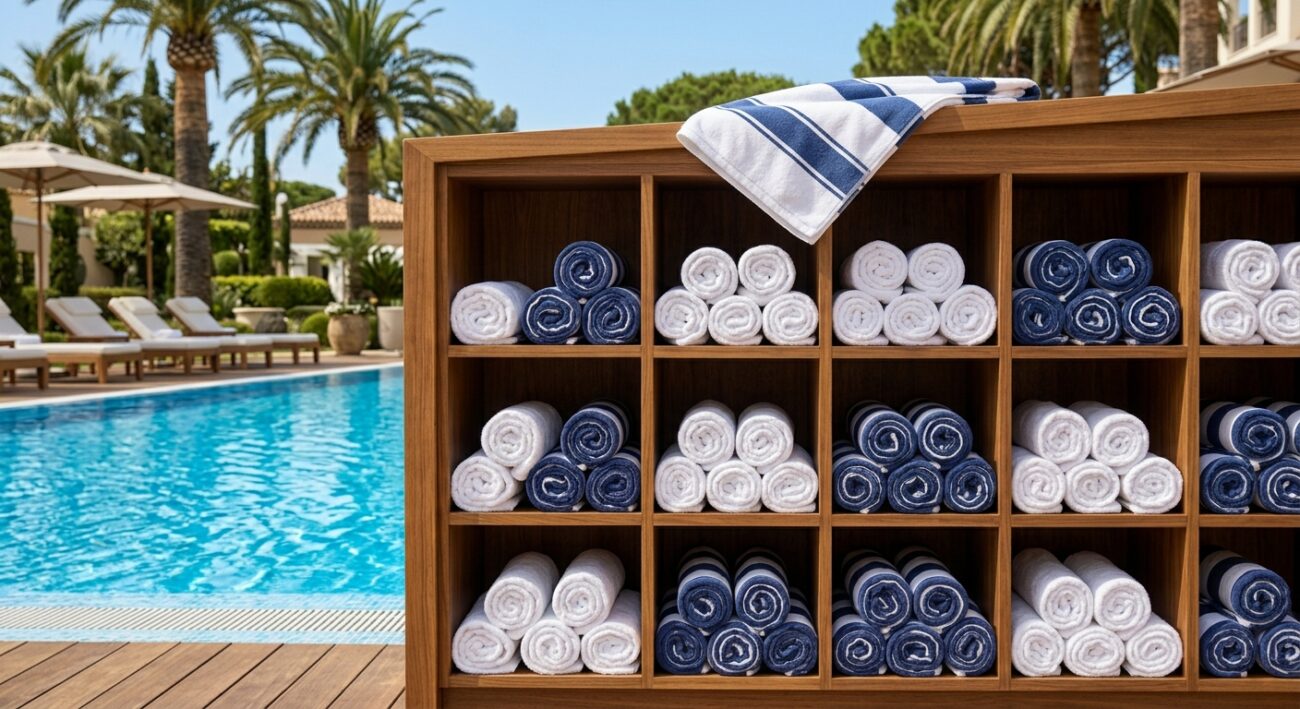
Before examining solutions, it is worth establishing the real financial scale of the problem. Industry estimates from the American Hotel and Lodging Association suggest that hotels lose between 10% and 20% of their linen inventory annually to theft — with the figure running toward the higher end at properties with active pool areas and premium-quality bathrobes.
For a UAE property with 150 rooms, stocking hotel bath towels at a 3-par ratio (3 towels per room in circulation), the baseline inventory is 450 bath towels. If 15% disappear annually through theft, that is 67–68 towels requiring replacement every year — before accounting for normal wear-and-tear replacement. At a quality level appropriate for a 4-star UAE property, that theft-driven replacement alone can represent AED 3,000–6,000 per year for bath towels.
Bathrobes carry a higher per-unit cost and a proportionally higher theft rate. A quality hotel bathrobe at 4-star specification represents a meaningful individual replacement cost, and they are among the most commonly taken items in hotel rooms worldwide. Pool towels — particularly at UAE beach resorts and properties with active pool decks — face the highest absolute volume of loss because of how they are distributed and how easily they leave the property in a guest’s beach bag.
Strategy 1: RFID Towel Tracking Systems
Radio Frequency Identification (RFID) chips embedded in hotel linen are the most comprehensive solution available for large-scale theft prevention and inventory management. RFID hotel linen tracking works as follows:
- A small, wash-resistant RFID chip (typically sewn into the towel hem during manufacturing) gives each towel a unique electronic identity
- Readers placed at laundry entry points, housekeeping corridors and — critically — at hotel exits track the movement of each towel
- Inventory management software gives the housekeeping team real-time data on where every towel is: in a room, in laundry, in storage, or missing
- Some systems allow exit readers to detect towels passing through the lobby or main entrance, triggering an alert before a towel actually leaves the property
The business case for RFID in UAE hotels: RFID-enabled linen tracking typically reduces towel loss by 30–50% in properties where it is implemented. For a large UAE resort with significant pool towel inventory, the system can pay for itself within 12–18 months through reduced replacement costs alone. The secondary benefit — accurate real-time inventory data — also reduces the operational labour involved in manual linen counts.
The practical limitation is upfront cost. RFID implementation requires reader infrastructure and software integration with your property management system. It is most cost-justified at properties with 100+ rooms, active pool areas, or a bathrobe programme where per-unit replacement costs are high.
Strategy 2: Barcode and QR Scanning Systems
For properties where RFID’s capital investment is not justified, barcode or QR code tracking provides a more accessible alternative. Each towel or bathrobe carries a unique barcode label (heat-sealed or woven-in during manufacture), and laundry staff scan items at key process points — check-out from rooms, laundry entry, and storage dispatch.
While this system cannot detect a towel leaving through the lobby in real time, it does create accurate inventory accounting. When a room’s towels are scanned out at checkout and the numbers do not reconcile with what housekeeping recorded, the discrepancy is logged and can trigger a review of the guest folio before checkout is finalised.
This leads directly to strategy 3.
Strategy 3: Guest Billing Policies for Missing Linen
A clearly communicated and consistently enforced guest billing policy for missing linen is one of the most effective deterrents available to UAE hotel properties — and one of the least consistently applied. The key elements of an effective policy:
In-room communication: A small card in the bathroom or bathrobe pocket noting that linens are inventoried and that missing items will be charged to the room account. The communication does not need to be aggressive — a simple, matter-of-fact note about the hotel’s linen inventory process is sufficient. The awareness that counting happens is itself a deterrent.
Pre-departure room check: For suites and rooms with bathrobes, a brief housekeeping check of linen items before a guest’s scheduled checkout — common at many GCC luxury properties — allows missing items to be identified while the guest is still on property and the conversation can happen naturally.
Consistent charge application: The policy only works as a deterrent if it is applied consistently. A hotel that charges for missing robes in 10% of cases and ignores it in 90% provides essentially no deterrent. Front office teams need clear authority and straightforward procedures to apply charges without escalation.
Strategy 4: Branded Linen as a Theft Deterrent
This is the strategy with the most direct relevance to your linen supplier relationship, and it is consistently undervalued by hotel procurement teams.
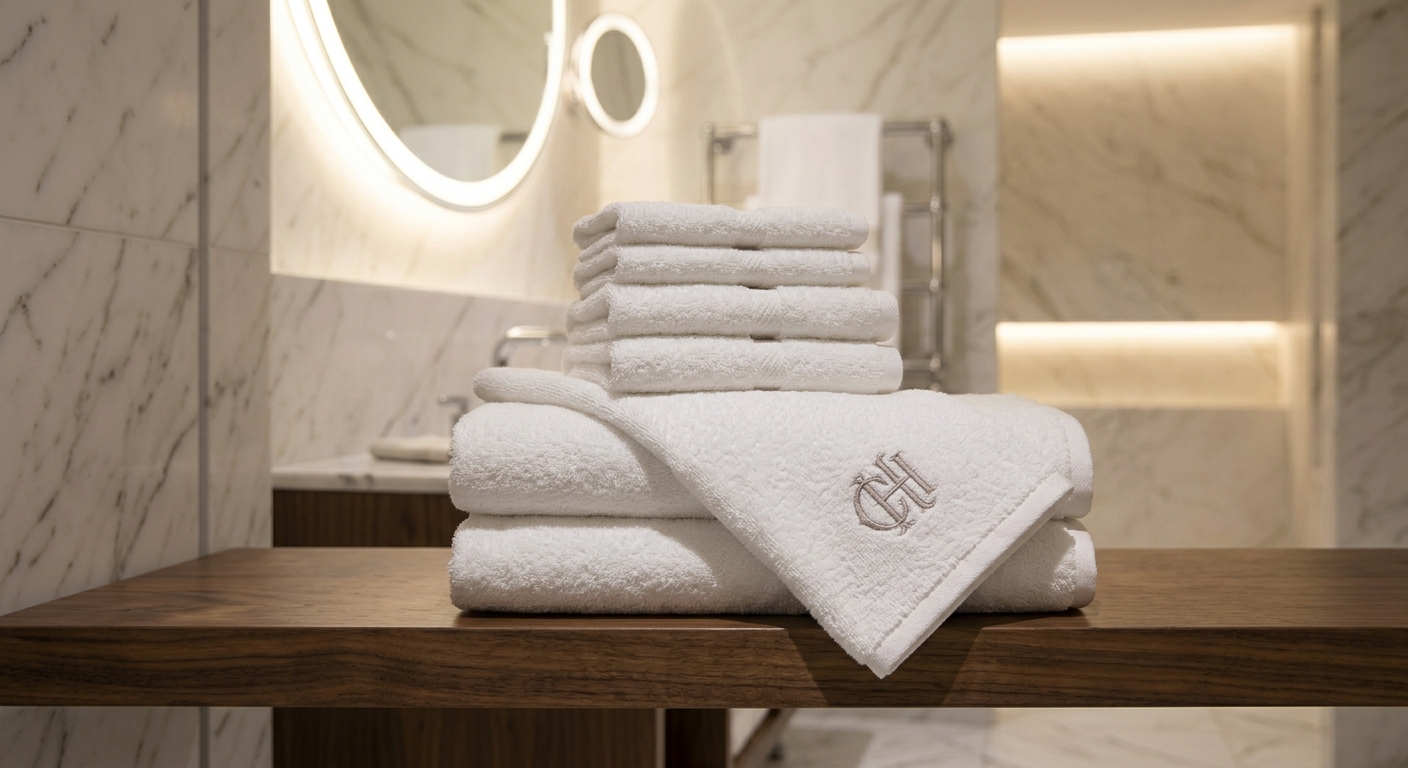
A plain white hotel bath towel is a universally desirable object — it is indistinguishable from a towel a guest might buy at home. A bath towel with a distinctive dobby border in the hotel’s brand colour, or a hotel face towel with an embroidered property monogram, is identifiably a hotel item. Taking it home means displaying something that is obviously a hotel towel — which most guests are not comfortable doing.
The deterrent effect is strongest with hotel bathrobes. An embroidered robe with the hotel’s name or logo is among the least anonymous items in the room. Properties that specify logo-embroidered bathrobes consistently report lower robe loss rates than properties using unbranded robes of equivalent quality.
For pool and beach towels — where towel loss is highest by volume — a dobby stripe or woven border in a colour specific to the property creates visual identification. Pool towels with a distinctive red stripe or geometric border pattern are identifiable as hotel property by poolside staff and by other guests, creating a mild social deterrent that reduces casual poolside loss.
Custom branding options from your linen supplier typically include:
- Woven dobby borders in specified brand colours
- Embroidered logos on bath towels, hand towels and bathrobes
- Jacquard-woven name labels integrated into the towel hem
- Custom stripe patterns on pool towels that are unique to the property
Strategy 5: Pool Towel Management Systems
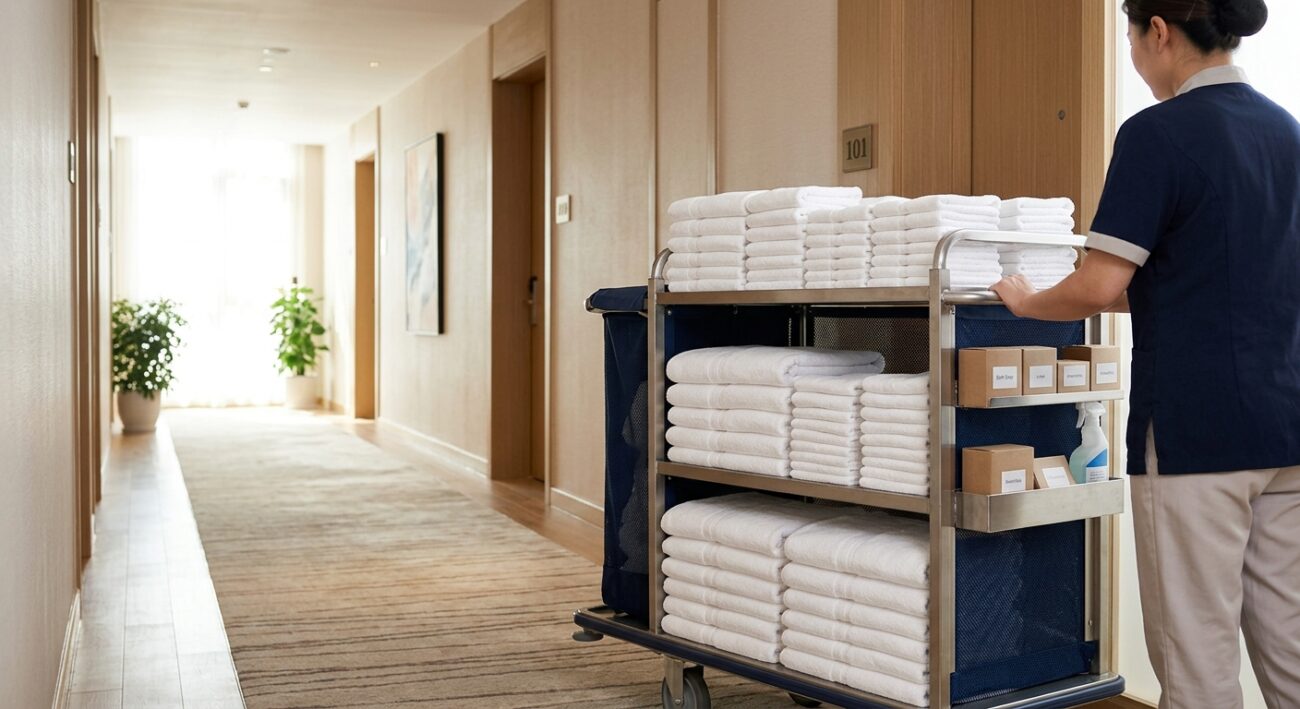
Pool areas represent the highest-risk environment for towel loss at UAE resort and hotel properties. Several pool-specific management approaches significantly reduce loss:
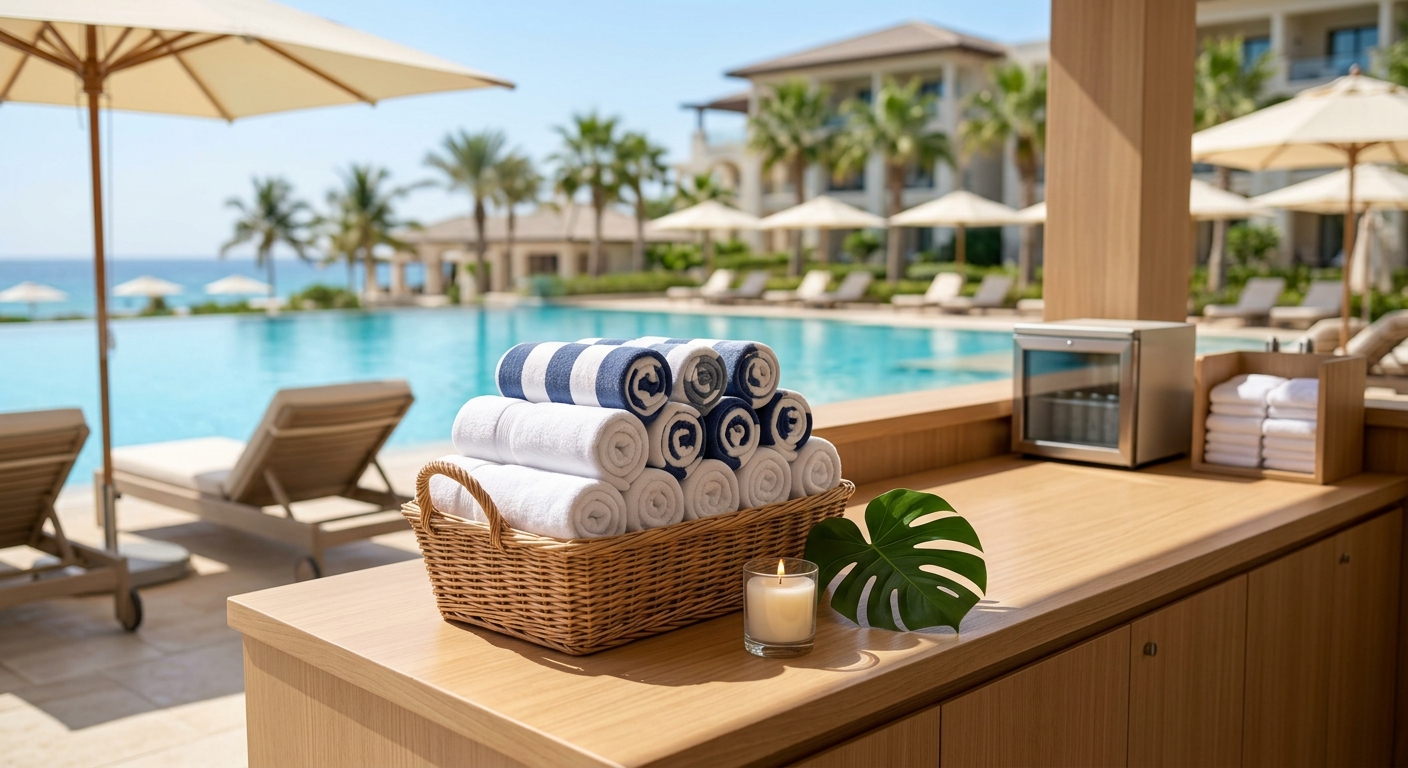
Towel deposit or exchange system: Guests exchange their room key card for a pool towel, which is logged against their room account. Returning the towel retrieves the key; a missing towel at checkout triggers a charge. This is the single most effective pool towel management system and is standard at most 5-star UAE resort properties.
Pool towel desk with sign-out: Even without a deposit system, a manned towel desk that records distribution and return creates accountability. The act of signing for a towel — even informally — significantly reduces the casual loss that occurs when towels are available from an unmanned rack.
Colour or pattern differentiation: Using a distinct pool towel design that is visually different from guest room towels makes it easier for poolside staff to identify and address room towels being taken to the pool and not returned.
Building a Theft-Resistant Linen Programme
The most cost-effective approach combines several of these strategies at an investment level appropriate to your property’s scale:
- Small properties (under 50 rooms): Branded linen with distinctive dobby borders + consistent guest billing policy
- Mid-scale properties (50–150 rooms): Branded linen + pool towel desk management + billing policy + barcode tracking in laundry
- Large properties and resorts (150+ rooms with pool): Full RFID tracking + embroidered bathrobes and branded pool towels + pool towel deposit system + billing policy
The supplier relationship matters here: a linen supplier who can provide consistent branded products — custom dobby borders, embroidery services, and consistent colour matching across repeat orders — is a strategic asset in your theft reduction programme, not just a commodity vendor.
Rushmore Hospitality supplies branded hotel linen across the UAE and GCC. From custom dobby border bath towels to embroidered hotel bathrobes and identifiable pool towels, we help UAE hotel procurement teams build linen programmes that reduce losses. Contact us to discuss your property’s requirements or view our full product range.