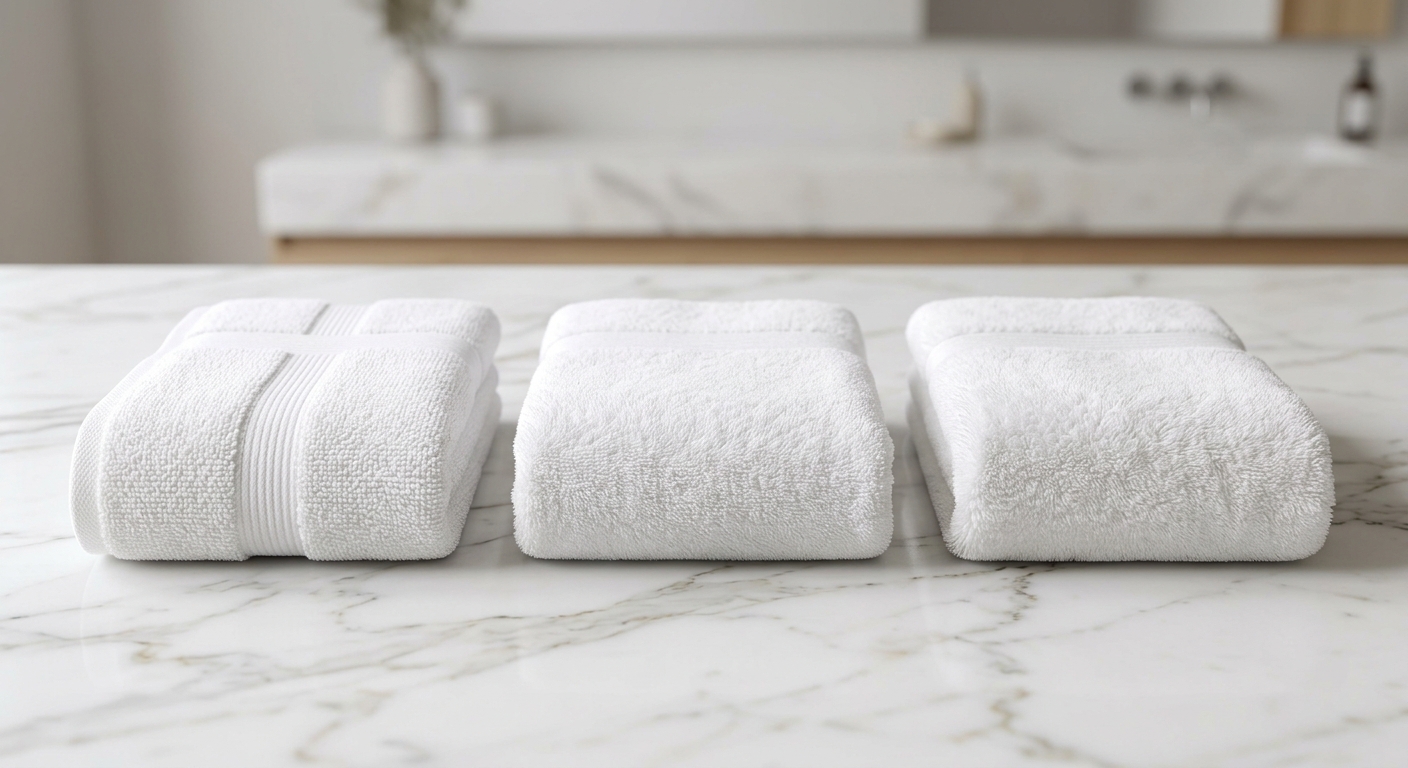

Every hotel loses some linen. Towels leave in suitcases, pool towels disappear from the beach, bathrobes end up as “souvenirs”, and sheets vanish somewhere between the room and the laundry. Individually these losses feel small. Added up across a year, they become a real cost line that most properties underestimate. This guide covers practical strategies for hotel linen theft reduction in the UAE, from tracking and policy to the towels themselves, so you can protect your inventory without damaging the guest experience.
The Real Cost of Linen Loss
Linen loss is easy to ignore because it is spread across many small purchases rather than one large invoice. The true cost has three parts:
- Direct replacement cost: the price of every towel, robe or sheet you have to rebuy.
- Rushed reorders: emergency orders often cost more and arrive with mismatched color or weight.
- Guest experience impact: a property that runs short of pool towels at peak hours, or mixes old and new stock, feels poorly run.
A simple way to see your own number is this formula: items lost per year × replacement cost per item. As a purely illustrative example, if a property loses 1,500 towels a year at AED 30 each, that is AED 45,000 annually, before rushed-order premiums. Your actual figures will differ, so the first step is always to measure.
Strategy 1: Measure Before You Act
You cannot reduce what you do not measure. Start with regular par-level audits:
- Count linen at set intervals, for example monthly, by category and location.
- Compare counts against purchases and expected wear.
- Separate genuine loss from normal wear-out, which is natural as towels age.
- Track pool, spa, rooms and banqueting separately, since losses concentrate in different places.
Most properties find that losses are heavily concentrated in one or two areas, usually pool and beach towels and bathrobes. Knowing this lets you target your effort.
Strategy 2: Consider RFID or Barcode Tracking
A hotel towel tracking system uses tags embedded in the hem or label of each item. Scanning them as linen goes to and returns from the laundry shows exactly how many items are in circulation and where they drop out of the loop.
Practical points to consider:
- What it does well: pinpoints where losses happen (rooms, pool, laundry) and supports accountability.
- What it does not do: it does not stop a guest from taking a towel. It provides data, not prevention.
- Cost: tags, readers and software are an investment, so it makes most sense for larger properties or high-value items such as bathrobes.
- Compatibility: confirm that tags survive repeated commercial washing and drying.
For smaller properties, simple manual counts and color coding often deliver most of the benefit at a fraction of the cost.
Strategy 3: Set Clear Guest Policies
Many guests simply do not realize that taking a robe or towel is not permitted. Clear, friendly communication works better than confrontation:
- Place a short, polite notice in the room about linen and robes, and about how to purchase them if desired.
- Include the policy in booking terms and at check-in so it is disclosed in advance.
- Be consistent. If you charge for missing items, apply the policy fairly and as stated.
- Check your terms with your legal advisers and follow applicable consumer regulations before charging guests.
The tone matters. A note that says “love our towels? Ask reception how to take a set home” turns a potential problem into a sales opportunity.
Strategy 4: Manage Pool and Beach Towels Differently
Pool and beach towels are often the biggest source of loss because they are used away from rooms, by guests and visitors alike. Controls that work well include:
- Check-out systems: hand out towels against a room key, wristband or towel card, and collect on return.
- Staffed towel stations: a clear point of issue and return at the pool or beach.
- Distinct appearance: use pool towels that look clearly different from room towels, so they are easy to spot leaving the property.
- Adequate stock: counter-intuitively, a shortage of towels increases hoarding. Guests who fear running out take extra.
Our pool and beach towels range is built for resort conditions, and a clearly distinct design makes them easier to manage and monitor.
Strategy 5: Use Branding as a Deterrent
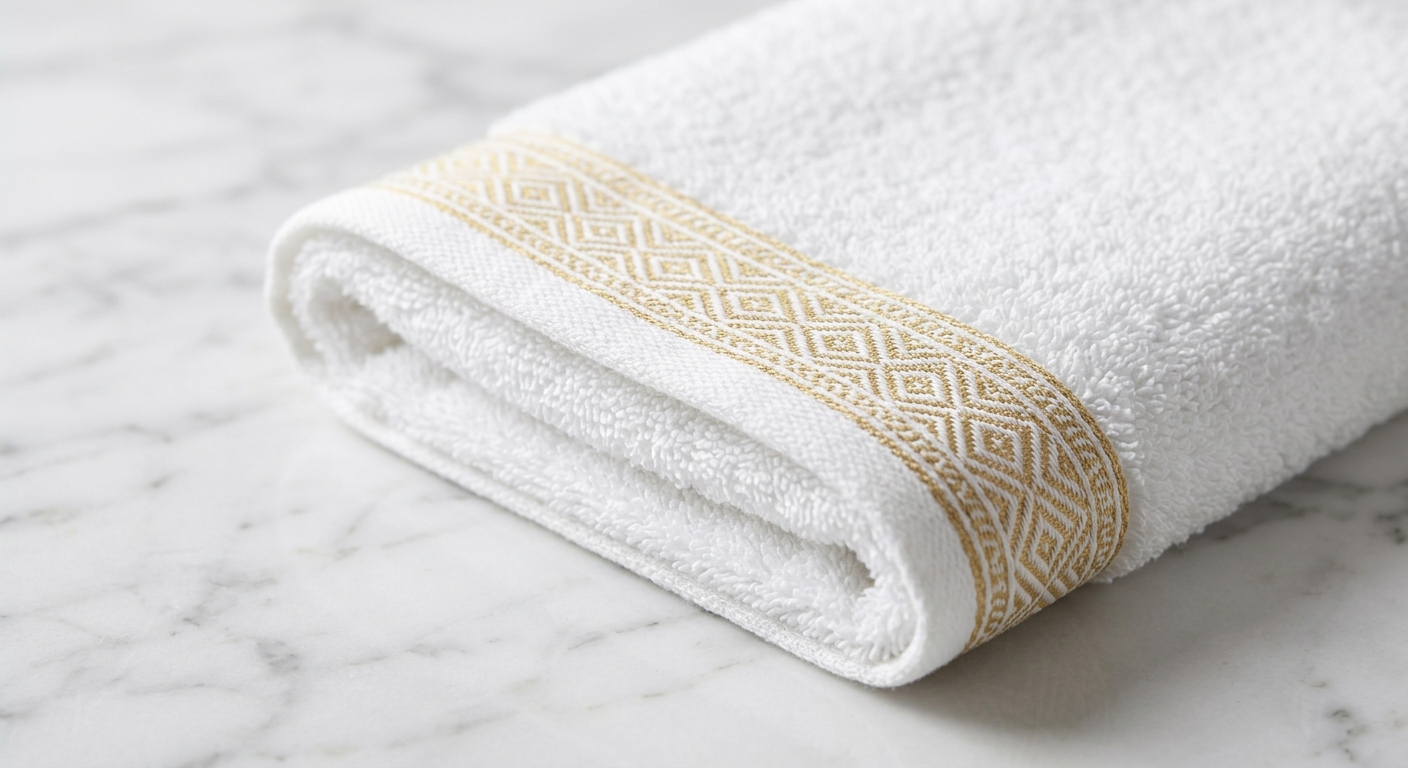
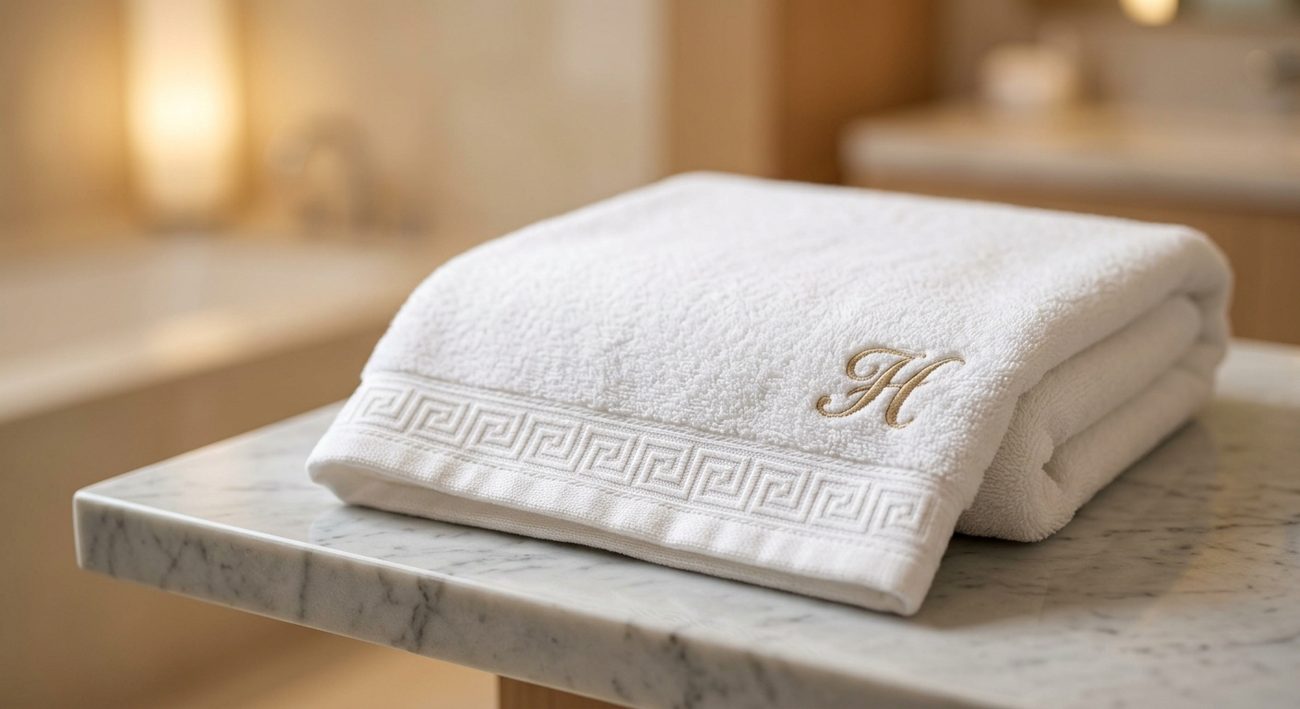
Visible branding makes a towel less appealing to take and easier to recognize. A towel with a woven border, a bold stripe or an embroidered logo looks like hotel property rather than something a guest might casually pack. Branding also helps staff and security identify hotel linen outside the property.
Options include:
- Embroidered logos or monograms on bath towels, robes and pool towels.
- Woven borders or distinctive stripes that make the item recognizable at a glance.
- Color coding by area: for example, one color for pool, another for spa, and white for rooms.
Branding is a deterrent and a marketing tool, not a guarantee. Combined with clear policies and good tracking, it supports a layered approach. Our guide to custom hotel towels with logo explains placement and durability, and our bath towels range can be specified with branded options for guest rooms.
Strategy 6: Control the Back of House
Not all linen loss happens in front of guests. Housekeeping and laundry processes matter too:
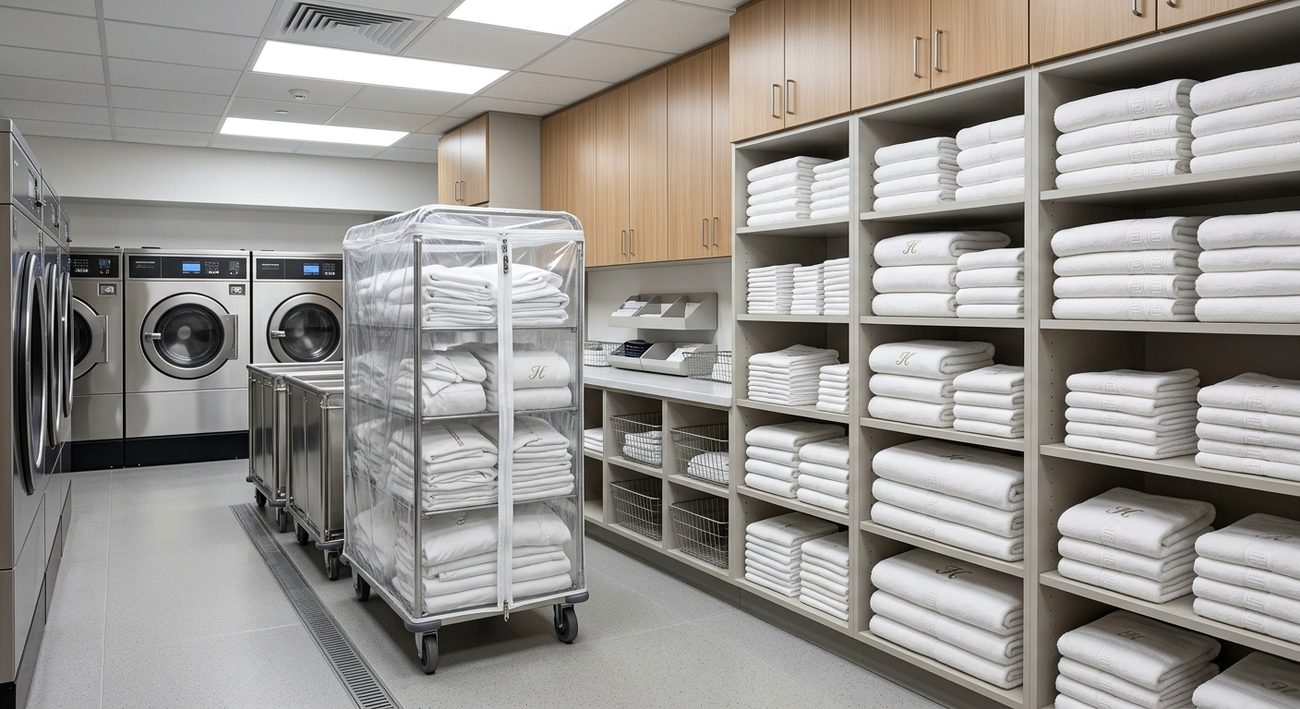
- Count linen out and in at the laundry, and reconcile differences promptly.
- Use sealed or lockable carts for soiled and clean linen.
- Keep storage areas controlled, with clear responsibility for access.
- If laundry is outsourced, agree counting procedures and loss responsibilities in the contract.
- Train staff to avoid using good linen as cleaning rags, which creates artificial “losses”.
Strategy 7: Offer an Official Way to Own It
A growing number of hotels sell bathrobes, towels and slippers in the spa, gift shop or via reception. Guests who love the product have a legitimate way to take it home, and the hotel earns margin instead of absorbing a loss. It also reinforces brand loyalty every time the guest uses the item at home.
Putting It Together: A Layered Approach
No single tactic solves linen loss. The most effective properties combine several:
- Regular audits to measure loss by area
- Tracking for high-value or high-loss items
- Clear, friendly guest communication and fair policies
- Controlled pool and beach towel systems
- Branded, recognizable towels and robes
- Controlled back-of-house counting and storage
- An official way for guests to purchase items
If branded or embroidered towels are part of your plan, explore the full RMT Hospitality product range or speak to our team about customization options for your property.
FAQs
How much linen does a typical hotel lose?
It varies widely by property type and location, with pool and beach towels and bathrobes usually the most affected. The best approach is to measure your own losses through regular par-level audits.
Does RFID tracking stop towel theft?
No. RFID provides data on where linen leaves circulation, which supports accountability and targeted action, but it does not physically prevent guests from taking items.
Can hotels charge guests for missing towels or robes?
Many do, but the policy should be clearly disclosed in booking terms and at check-in, applied consistently, and checked against applicable local regulations and legal advice.
Do branded towels really reduce theft?
Branding can make towels less appealing to take and easier to identify, but it works best alongside clear policies, controlled issue systems at the pool and good tracking.
How can resorts reduce pool towel loss?
Use a check-out system with room key or wristband, staffed towel stations, towels that look distinct from room linen, and enough stock that guests do not feel the need to hoard.