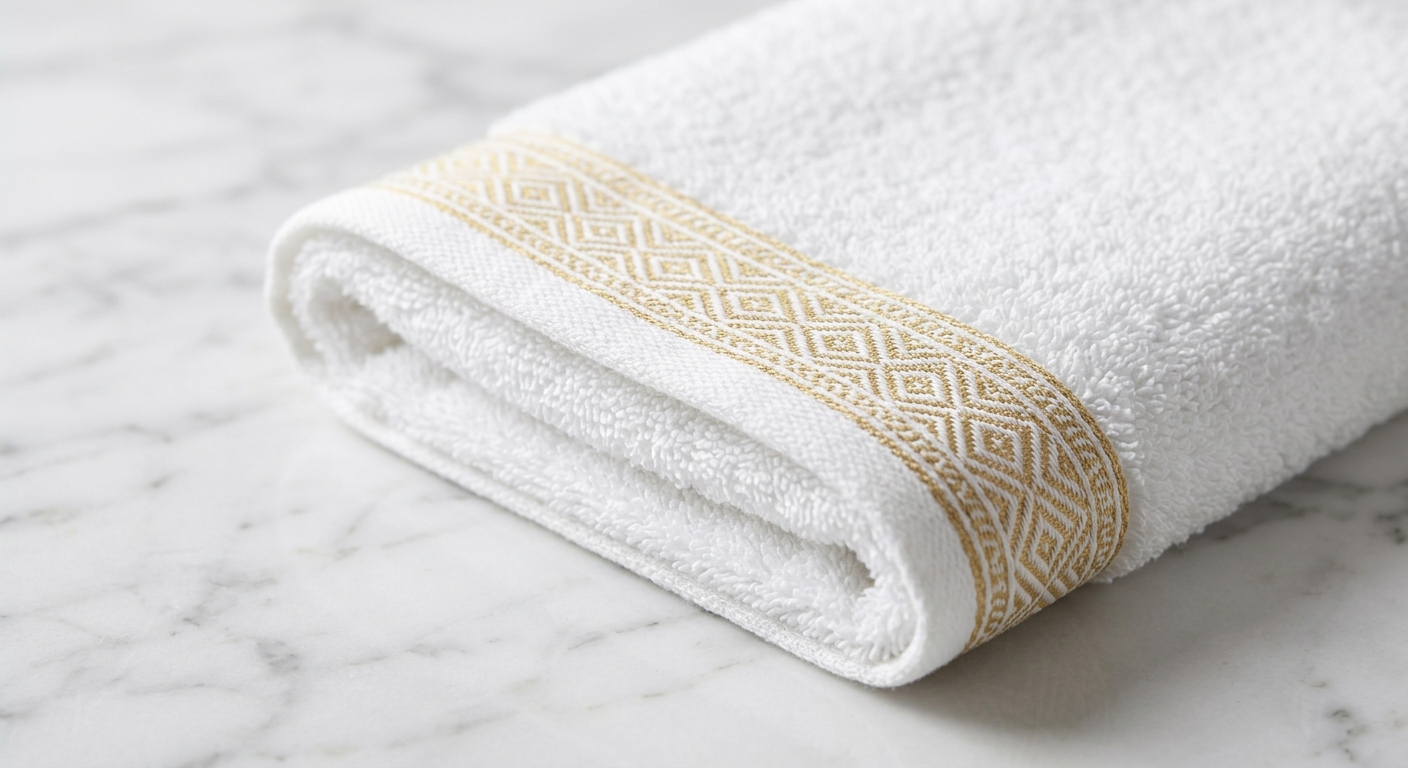
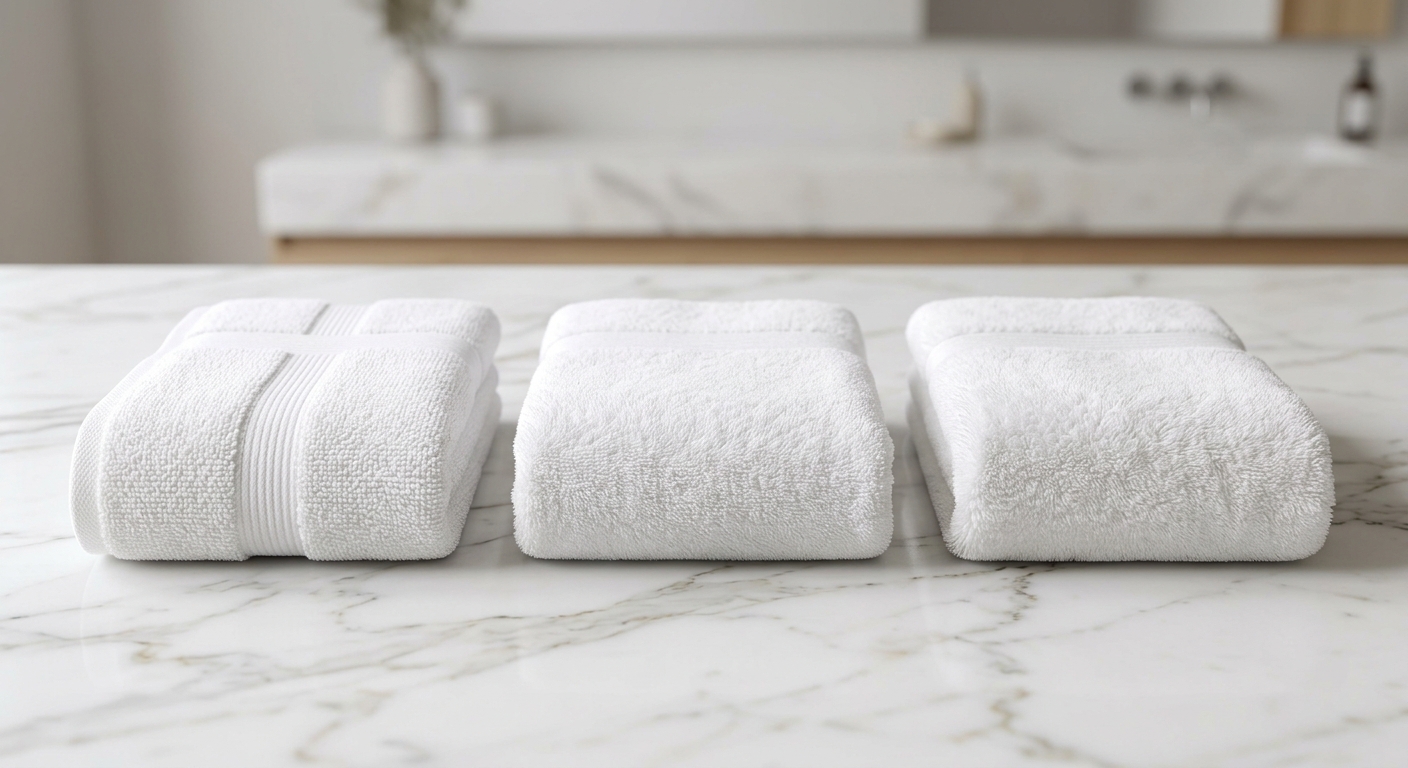
When a hotel procurement manager places a bulk towel order, the conversation usually starts with GSM and ends with price. Cotton processing method — the factor that determines how the raw fibre is prepared before it is ever spun into yarn or woven into terry cloth — is almost never part of the discussion. Yet it is arguably the single most important variable affecting how a towel will perform across 150 commercial wash cycles, how guests will experience it on day one and day four hundred, and what the true cost per use will look like when the towel is finally retired from service.
There are three cotton processing methods used in hotel towel manufacturing: open-end spinning, ring-spun spinning, and combed cotton (which is a fibre preparation step applied before ring-spinning). Each produces a meaningfully different towel. This guide breaks down how each method works, what it produces, and which specification is right for which category of UAE hospitality property.
How Cotton Becomes a Towel: The Processing Stages That Matter
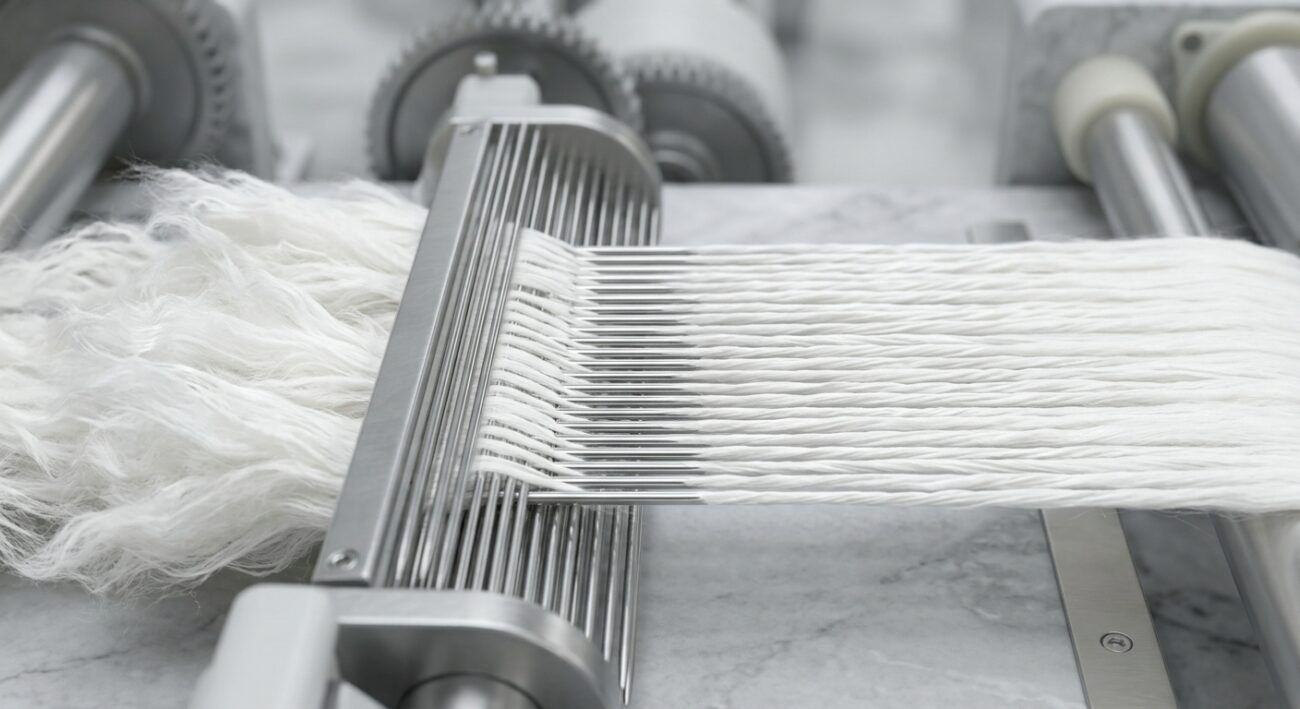
Before comparing the three methods, it helps to understand where in the manufacturing process they occur.
Raw cotton fibre arrives at a textile mill as a mixture of long useful fibres, short broken fibres (called noils), seed fragments, leaf particles and dust. Before it can be spun into yarn and woven into towel fabric, it must be cleaned and organised. The method used to do this — and the method used to spin the resulting fibres into yarn — determines the cotton type you are buying.
The three paths are:
Path 1 — Open-End (OE) Spinning: Cotton is carded (combed roughly to remove large debris) and then spun directly into yarn using a high-speed rotor. The process is fast and cost-efficient but leaves short fibres and some impurities in the yarn.
Path 2 — Ring-Spun Spinning: Cotton is carded and then mechanically twisted into yarn using a ring-and-traveller spinning frame — a slower process that produces a tighter, stronger, more consistent yarn.
Path 3 — Combed Cotton + Ring-Spun: Cotton is carded, then passed through a combing machine that removes the shortest fibres (typically the bottom 15–20% by length) and straightens the remaining long fibres in parallel alignment before ring-spinning. This is the highest-input process and produces the strongest, smoothest, most consistent yarn of the three.
Open-End Cotton Towels: The Entry-Level Standard
Open-end spinning is the dominant method in commodity hotel towel manufacturing. It accounts for the majority of towels sold at the budget and lower-midscale tier globally, and it is the default product in most undifferentiated wholesale catalogues.
How it is made: After carding, cotton fibres are fed into a high-speed rotor spinning unit. The rotor pulls fibres apart and wraps them into yarn at speeds several times faster than ring-spinning. Because the process does not require the slow mechanical twisting of ring-spinning, output volume per machine-hour is significantly higher.
What this produces: The resulting yarn contains a mixture of long and short fibres, with the shorter fibres creating uneven texture points in the yarn structure. When woven into terry cloth, this produces a towel that:
- Has a coarser initial hand feel compared to ring-spun
- Develops a rough, slightly scratchy texture more quickly after repeated washing — short fibre ends work their way to the surface and create pilling
- Has lower tensile strength in the yarn, meaning the terry loops are more susceptible to pulling and thinning under the mechanical agitation of commercial laundry
- Typically reaches functional end-of-life between 80–100 commercial wash cycles in a high-frequency laundry environment
Cost position: Open-end towels are the least expensive option per unit. The lower manufacturing cost is real — and so is the trade-off in durability and guest experience.
Where open-end towels make sense: Budget hotels, hostels, staff accommodation facilities, and high-loss environments (outdoor events, construction site facilities) where replacement cost is the primary variable. For a 3-star or above UAE hotel property competing on guest satisfaction scores, open-end cotton is not the right specification for guest bathroom towels.
Ring-Spun Cotton Towels: The Industry Standard for 4-Star and 5-Star Hotels
Ring-spun cotton is the correct specification for the vast majority of hotel properties in the UAE operating at the 3-star upper tier, 4-star, and 5-star level. It is the cotton processing method used in our luxury hotel bath towels at Rushmore Hospitality, and the reason is straightforward: it delivers the best balance of softness, durability and cost at scale for commercial hospitality use.
How it is made: After carding, cotton fibres are drawn out and mechanically twisted into yarn using a ring-spinning frame. The twisting action forces the fibres into tight alignment along the yarn axis, binding the longer fibres together and giving the yarn its characteristic strength and smoothness. The process is slower than open-end spinning — productivity per machine-hour is lower — but the yarn quality is demonstrably superior.
What this produces: Ring-spun yarn contains a higher proportion of long fibres in tight alignment, which creates a terry cloth towel that:
- Has a noticeably softer initial hand feel than open-end cotton of the same GSM
- Maintains its softness and pile height significantly better over repeated washes — long fibres in tight alignment resist the surface pilling and loop deterioration that degrades open-end towels
- Has higher tensile strength in the terry loop structure, meaning pile loops withstand commercial laundry agitation without thinning or pulling
- Typically delivers 150–200 commercial wash cycles before functional end-of-life — roughly double the lifespan of open-end cotton at equivalent GSM
- Produces a more consistent, even surface across the towel body, which shows better in folded presentation and in photography
Cost position: Ring-spun towels carry a higher unit price than open-end — typically 15–30% more at equivalent GSM. However, the total cost of ownership picture over a 3-year operational period is significantly more favourable, because the towel’s wash-cycle lifespan is roughly double. A procurement manager paying 20% more per towel for twice the wash life is reducing their annual replacement budget, not increasing it.
Where ring-spun towels are the right choice: Any UAE hotel property operating at 3-star upper tier and above. Ring-spun hotel bath towels, hotel hand towels and hotel face towels are the industry-standard specification for the GCC luxury and upper-midscale hotel market. Ring-spun construction is also what we specify for our pool and beach towels — where wash frequency and chlorine exposure make fibre durability especially important.
Combed Cotton Towels: The Premium Tier
Combed cotton is not a separate spinning method — it is a preparatory step applied before ring-spinning. The distinction matters because “combed ring-spun cotton” is the most precise description of what premium hotel towels contain, and because understanding the combing step clarifies exactly what the premium is paying for.
How it is made: After carding, cotton fibres pass through a combing machine fitted with fine metal teeth that perform two functions simultaneously: they remove the shortest fibres from the batch (typically the bottom 15–20% of fibres by length), and they straighten the remaining long fibres into near-parallel alignment. The result is a significantly more refined fibre bundle — longer average fibre length, more uniform diameter, fewer impurities — which is then ring-spun into yarn.
What this produces: Combed ring-spun yarn is the highest-quality cotton yarn produced at commercial scale. When woven into terry cloth, it produces a towel that:
- Has the softest hand feel of any cotton towel construction — the removal of short fibres eliminates the micro-texture points that create a slightly rough feel even in standard ring-spun
- Produces a noticeably smoother, more lustrous surface on the towel body, with a subtle sheen that differentiates it visually from standard ring-spun at close inspection
- Has excellent pill resistance — with short fibres removed before spinning, there are almost no short fibre ends to migrate to the surface over repeated washing
- Retains softness longer through the wash cycle lifespan
- Typically commands 25–40% premium over standard ring-spun at equivalent GSM
The important caveat — combing removes material: Because the combing step removes 15–20% of the raw cotton fibre input, combed cotton yarn costs more to produce not just because of the additional processing step, but because more raw cotton is consumed per kilogram of finished yarn. This raw material cost is real and is passed through to the finished towel price.
Where combed cotton is the right choice: 5-star and ultra-luxury properties where guest bathroom experience is a primary competitive differentiator. Flagship suites, presidential rooms, luxury spa towel programmes and branded bathrobe sets for top-tier properties. For standard room bath towels across a 300-room property, combed cotton’s price premium typically outweighs the marginal guest experience benefit over quality ring-spun — but for hotel bath sheets in suite bathrooms, combed cotton justifies its cost clearly.
Side-by-Side Comparison: What Matters for UAE Hotel Procurement
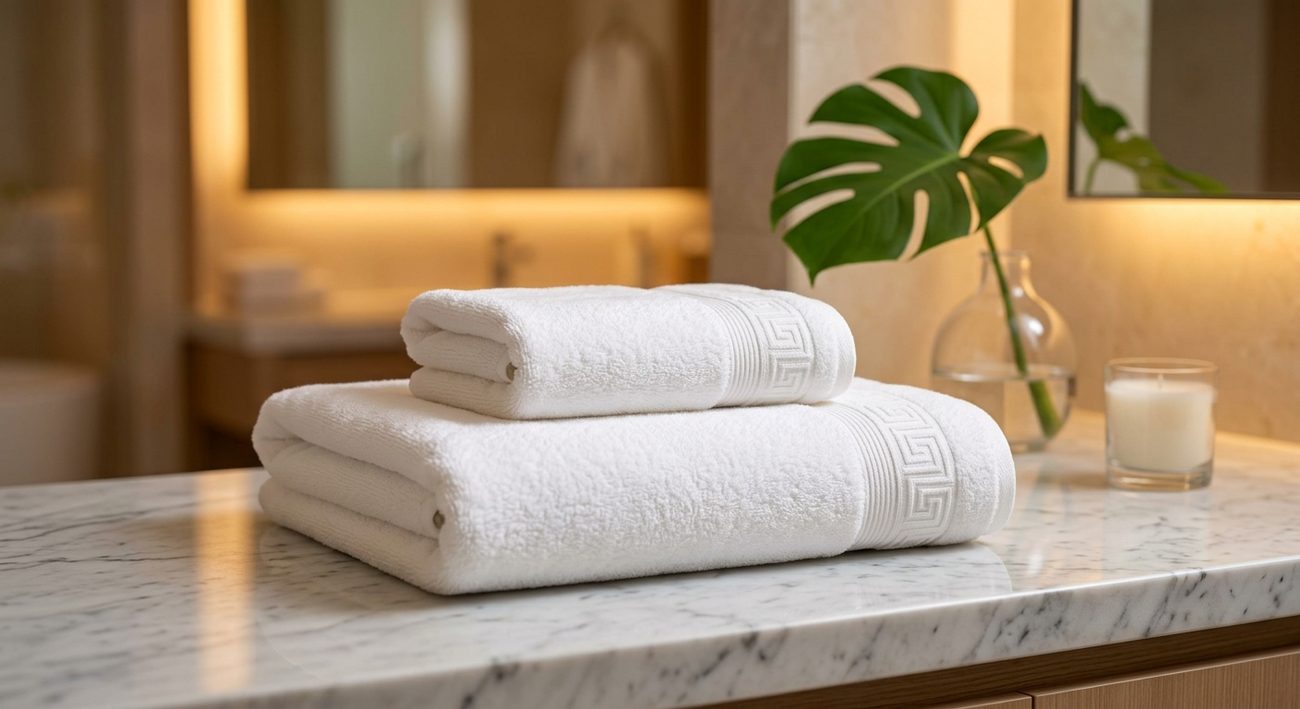
Here is how the three methods compare across the factors UAE hotel procurement managers care about most:
Hand Feel (Day 1): Open-end — acceptable. Ring-spun — soft and clearly hotel quality. Combed ring-spun — noticeably premium, cloud-like.
Hand Feel (After 50 Washes): Open-end — roughening noticeably. Ring-spun — maintains softness well. Combed ring-spun — still excellent.
Commercial Wash Cycle Lifespan: Open-end — 80–100 cycles. Ring-spun — 150–200 cycles. Combed ring-spun — 180–220+ cycles.
Pilling Resistance: Open-end — pills within 20–30 washes. Ring-spun — good resistance. Combed ring-spun — excellent resistance.
Unit Price (relative): Open-end — baseline. Ring-spun — 15–30% above baseline. Combed ring-spun — 35–55% above baseline.
Total Cost of Ownership (3 years): Open-end — highest (most replacement cycles). Ring-spun — best value. Combed ring-spun — higher than ring-spun but justified at luxury tier.
Right For: Open-end — budget/3-star lower. Ring-spun — 3-star upper to 5-star mainstream. Combed ring-spun — 5-star luxury and ultra-luxury.
What This Means for Your Linen Programme
For most UAE hotel properties operating at the 4-star and mainstream 5-star level, ring-spun cotton is the correct specification across the full guest bathroom linen set — bath towels, hand towels, face towels, bath sheets and bath mats. It delivers the softness and durability guests expect at that price point, the wash-cycle lifespan that makes procurement economics work, and the visual quality that photographs well in guest-generated social content.
Combed ring-spun cotton is worth specifying for flagship suite bathrooms, spa treatment towel sets, and hotel bathrobes at ultra-luxury properties where the per-room revenue justifies the additional investment per linen unit.
Open-end cotton has its place — but that place is not a guest bathroom in any UAE hotel competing above the budget tier.
When speaking with any hotel linen supplier, ask them directly: what is the cotton processing method used in this towel? A supplier who cannot answer that question precisely — or who answers with GSM and colour rather than cotton type — is selling you a commodity product without the quality controls in place to back up their claims.
At Rushmore Hospitality, all our hotel towel products are manufactured using ring-spun cotton with documented wash-test performance data. Contact our team to request samples, specification sheets and wash-cycle test results before placing your bulk order.