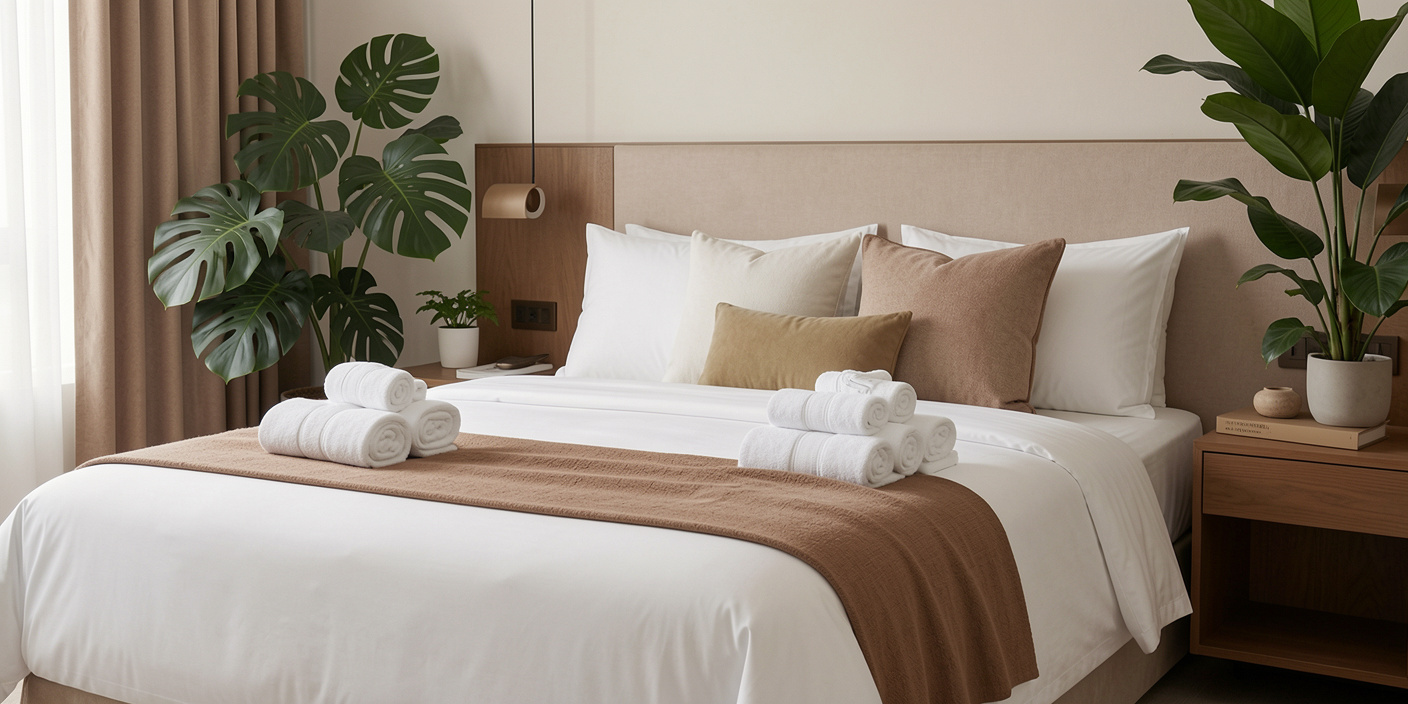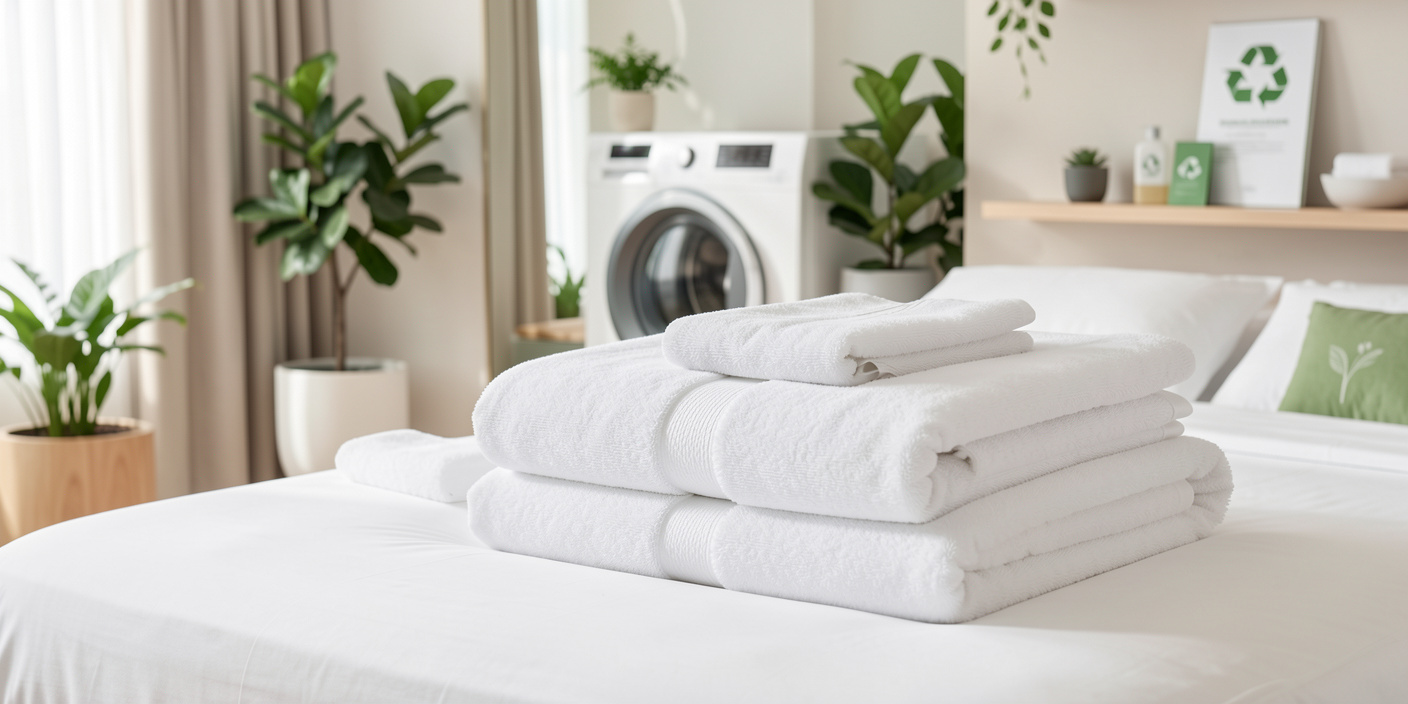

This guide explores what truly impacts towel performance and how hotels can extend the lifespan of their linen investment.
Why Towel Durability Matters in Hospitality
Hotel towels are more than basic amenities. They influence:
- Guest comfort and perception of quality
- Operational efficiency
- Laundry costs
- Long-term linen budgets
When towels wear out prematurely, hotels face higher hotel linen replacement costs and potential negative guest impressions. Identifying the main towel durability factors allows properties to make smarter purchasing and care decisions.
1. Fabric Quality and Fiber Composition
One of the most critical towel durability factors is the type of cotton used.
Long-Staple vs. Short-Staple Cotton
- Long-staple cotton produces smoother, stronger yarns that resist fraying and thinning.
- Short-staple cotton is more prone to pilling and fiber breakage.
Premium cotton towels typically maintain softness and structure longer, directly improving overall hotel towels lifespan.
Ring-Spun vs. Open-End Yarn
- Ring-spun yarn creates tighter, stronger fibers.
- Open-end yarn is more affordable but less durable.
Hotels that prioritize durability often choose ring-spun constructions to minimize early wear.
2. Towel Weight (GSM) and Construction
GSM (grams per square meter) measures towel density and thickness.
- 400–500 GSM: Lightweight, dries quickly, moderate durability
- 500–650 GSM: Balanced comfort and durability
- 650+ GSM: Plush but heavier, may stress fibers during washing
Higher GSM doesn’t always guarantee longer life. Construction quality and yarn strength matter just as much. Choosing the right GSM for your property type is one of the overlooked towel durability factors.
Luxury properties may prefer higher GSM for guest comfort, while high-turnover hotels may benefit from mid-weight towels that withstand frequent laundering.
3. Washing and Drying Practices (Hotel Linen Wash)
Improper laundering is one of the biggest threats to hotel linen durability.
Water Temperature
Excessively hot water weakens cotton fibers over time. While sanitization is essential, optimized temperature control helps preserve towel strength.
Detergent Type
- Harsh chemicals accelerate fiber breakdown.
- Excess detergent leaves residue, causing stiffness.
- Chlorine bleach, when overused, significantly reduces hotel towels lifespan.
Switching to oxygen-based bleach and properly calibrated detergents improves long-term performance.
Overloading Machines
Crowded washers increase friction between textiles, leading to:
- Fraying edges
- Pilling
- Uneven wear
Careful management of the hotel linen wash process is essential for maximizing durability.
4. Drying Methods and Heat Exposure
High dryer temperatures are a hidden contributor among towel durability factors.
Excessive heat:
- Breaks down fibers
- Causes shrinkage
- Reduces absorbency
Using moderate heat settings and avoiding over-drying preserves both softness and structural integrity.
Hotels should also regularly clean lint filters and dryer ducts to ensure efficient drying without overheating fabrics.
5. Frequency of Use and Rotation Systems
How towels are rotated significantly impacts their longevity.
Without proper rotation:
- Some towels are overused
- Others remain in storage too long
Implementing a structured inventory rotation system ensures even wear across all stock, extending the overall hotel towels lifespan and delaying large-scale hotel linen replacement.
6. Initial Purchase Decisions: Cheap vs. Quality
Budget constraints sometimes push hotels toward cheap hotel towels. While the upfront cost is lower, long-term performance often suffers.
Common issues with low-cost towels:
- Faster thinning
- Increased fraying
- Color fading
- Reduced absorbency
When evaluating towel durability factors, cost per use matters more than purchase price. Investing in higher-quality towels may result in fewer replacements and improved hotel linen durability over time.
7. Chemical Exposure Beyond Laundry
Towels used in pools and spas face additional durability challenges:
- Chlorinated water
- Sunscreen residue
- Body oils
- Cosmetic products
These substances weaken fibers if not treated properly during the hotel linen wash process. Prompt rinsing and specialized detergents can significantly reduce damage.
8. Handling and Storage Practices
Improper handling can accelerate wear.
- Over-tight folding weakens seams
- Storing damp towels encourages mildew
- Poor ventilation leads to odor buildup
Clean, dry, well-ventilated storage areas help maintain structural integrity and protect against unnecessary hotel linen replacement.
9. Seam Strength and Edge Finishing
Edges are often the first area to deteriorate.
High-quality towels feature:
- Reinforced hems
- Double-stitched borders
- Dense binding
Strong seam construction prevents unraveling and significantly improves resistance to repeated industrial washing.
10. Tracking Performance and Replacement Cycles
Even the best towels have a lifespan. Monitoring wear patterns helps determine the ideal hotel towels lifespan for your property.
Signs towels need replacement:
- Noticeable thinning
- Reduced absorbency
- Persistent staining
- Frayed edges
- Loss of softness
Proactive hotel linen replacement planning prevents guest dissatisfaction and avoids sudden large capital expenses.
How to Improve Hotel Linen Durability Long-Term
To manage towel durability factors effectively, hotels should:
- Invest in higher-grade cotton and reinforced construction
- Optimize the hotel linen wash process
- Use moderate drying temperatures
- Implement inventory rotation systems
- Avoid overuse of harsh chemicals
- Monitor towel performance regularly
By focusing on these strategies, properties can significantly improve hotel linen durability, reduce operational costs, and extend the value of their towel investment.
Final Thoughts
Understanding and managing key towel durability factors is essential for hotels aiming to balance guest comfort with operational efficiency. From fiber selection and GSM to washing procedures and chemical exposure, every stage of a towel’s lifecycle impacts its longevity.
Rather than relying on low upfront pricing or reactive hotel linen replacement, a proactive strategy ensures better performance, lower total cost of ownership, and consistently positive guest experiences.
With the right purchasing decisions and maintenance protocols, hotels can maximize their hotel towels lifespan and protect their linen investment for years to come.