Commercial hotel linens face extreme operational demands. Daily washing, high temperatures, chemical exposure, and mechanical stress place continuous pressure on textile fibers. Without structured care processes, even premium linens deteriorate quickly, increasing costs and compromising guest satisfaction.
Following proven commercial laundry best practices for hotels allows properties to protect their investment, maintain hygiene standards, and support sustainability initiatives.
Why Linen Longevity Is Critical for Hotel Operations
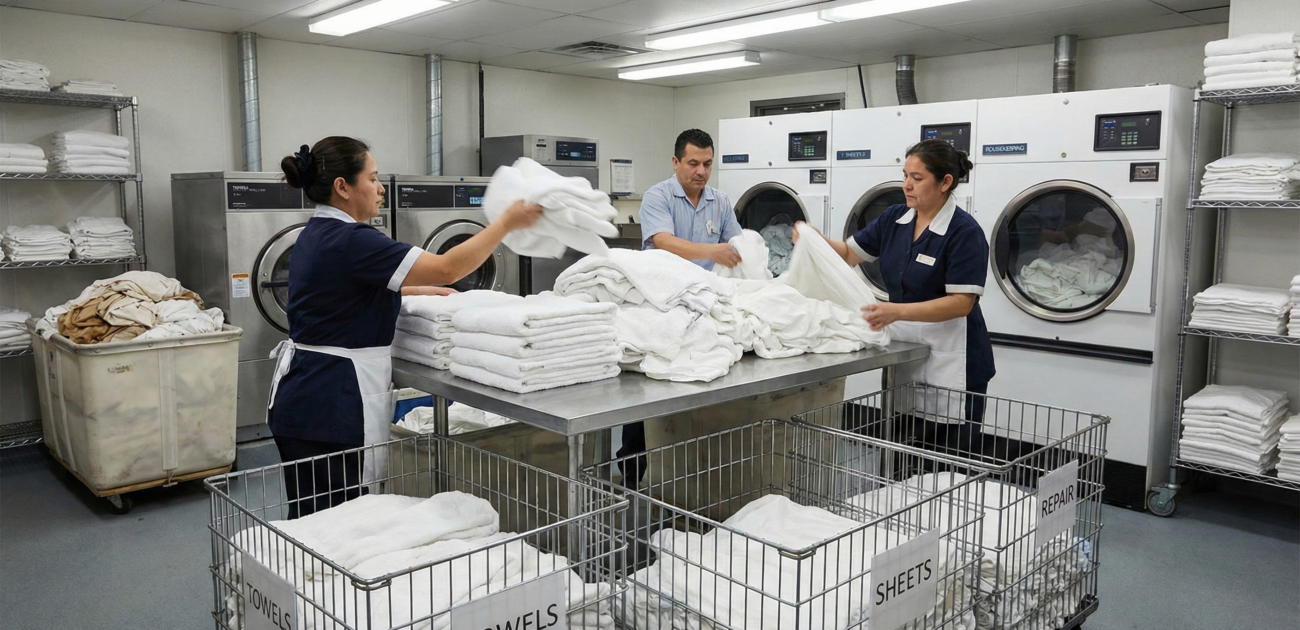
Linens represent a significant operational expense. Poor linen management leads to:
- Frequent replacements and rising procurement costs
- Increased textile waste and environmental impact
- Inconsistent guest experience
- Negative perceptions of cleanliness and quality
Effective hospitality linen maintenance improves cost control and brand consistency.
Wash Temperature Management
Excessive heat is one of the most common causes of fabric damage.
Best temperature practices include:
- Washing sheets at moderate temperatures to preserve fiber strength
- Using higher temperatures for towels only when heavily soiled
- Avoiding unnecessary boiling cycles
Controlled temperatures reduce shrinkage, preserve softness, and save energy.
Chemical Usage and Fabric Protection
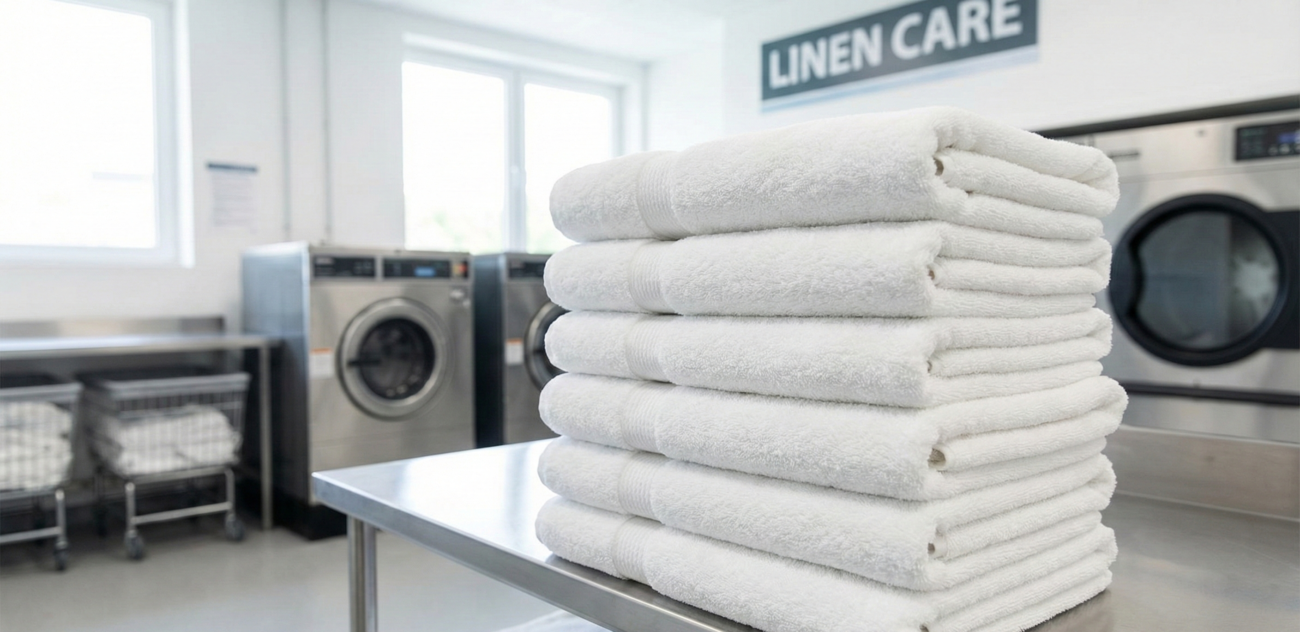
Chemical misuse accelerates linen deterioration.
Best chemical management practices include:
- Using hospitality-grade detergents designed for commercial textiles
- Limiting chlorine bleach usage
- Ensuring proper neutralization after washing
- Avoiding overdosing chemicals
These steps are essential for how to keep hotel towels white while maintaining fabric integrity.
Sorting and Load Control
Mechanical stress during washing significantly impacts linen lifespan.
Hotels should ensure:
- Towels and sheets are washed separately
- Machines are not overloaded
- Linens are sorted by fabric type and soil level
Proper sorting reduces friction and fabric tearing.
Linen Rotation Systems
Uneven usage leads to premature wear.
Effective rotation involves:
- Dividing inventory into equal usage sets
- Tracking wash cycles
- Rotating linens systematically
Rotation alone can extend linen life by up to 40%.
Drying, Finishing, and Ironing
Over-drying and excessive heat damage fibers.
Best practices include:
- Using moisture-sensor dryers
- Avoiding prolonged tumble drying
- Maintaining controlled ironing and calender temperatures
These steps preserve softness and absorbency.
Storage and Handling Best Practices
Incorrect storage can damage even freshly laundered linens.
Hotels should:
- Store linens in dry, ventilated areas
- Avoid plastic wrapping
- Protect textiles from sunlight and humidity
Proper storage prevents odor, mildew, and discoloration.
Importance of Linen Quality
Laundry discipline alone cannot compensate for low-quality textiles.
Our linens are:
- Engineered for high-use commercial laundry cycles
- Tested for industrial durability
- Designed to retain whiteness, softness, and strength
High-quality linens make best practices far more effective.
Eco-Friendly Linens and Laundry Efficiency

Organic and recycled fiber linens offer additional operational benefits:
- Require fewer harsh chemicals
- Perform better under controlled washing
- Maintain quality over extended use
- Support sustainability targets
Custom eco-friendly solutions help hotels align performance with environmental responsibility.
Conclusion
Extending the life of commercial linens requires a combination of disciplined laundry practices and high-performance textile sourcing. By following proven commercial laundry best practices for hotels and investing in durable, eco-friendly linens, hotels can reduce costs, improve sustainability, and deliver a consistently premium guest experience.
CTA (Below Conclusion)
Extend the life of your hotel linens and reduce costs.
Partner with us for commercial-grade, eco-friendly textiles built for demanding hospitality environments.
FAQs
What are commercial laundry best practices for hotels?
Commercial laundry best practices include proper wash temperatures, controlled chemical usage, correct sorting, linen rotation, and careful drying and storage.
How can hotels extend the life of their linens?
Hotels can extend linen lifespan by using quality textiles, avoiding excessive heat and chemicals, implementing rotation systems, and following proper laundry procedures.
Why do hotel towels turn yellow or grey?
Discoloration is often caused by chemical residue, overuse of bleach, improper neutralization, or poor water quality.
How often should hotel linens be replaced?
With proper hospitality linen maintenance and high-quality textiles, commercial linens can last several hundred wash cycles before replacement.
Are eco-friendly linens better for commercial laundry?
Yes. Eco-friendly linens often require fewer chemicals, handle washing stress better, and maintain softness and strength over time.